

Beyond the inbox: Where does your press release actually go?

Even the best-written press releases, containing the key elements journalists usually look for, need a way to reach the right audience and a place to land.
And that shouldn’t be narrowed down to your website or sending releases and media pitches out into the abyss and hoping they magically land with the right journalist.
Meanwhile, understanding the key differences between press releases and news stories, as discussed in the first part of this series, is only the beginning. Once you’ve written the press release, the next question is: Where does it go?
There are now three primary goals when distributing a press release. Companies or brands usually want to:
-
Reach audiences through distribution platforms, databases and media networks.
-
Increase the chances that journalists discover their news and develop their own stories.
-
Provide accurate information that AI chatbots can reference when generating responses.
Now I have to be frank with you.
Many journalists receive more email pitches than they can realistically respond to, which means plenty of pitches never get a reply.
One reason is that many pitches lack the key elements journalists are looking for, such as relevance to their beat, their audience or the communities they cover.
Still, that doesn’t mean media pitching is ineffective. Many news organizations value relationships with public relations professionals, and reporters are always on the hunt for strong story ideas that fit their beats.

Media pitching is a little like a dart game. You are aiming for the middle circle, but hitting the target requires the right message, timing and audience.
You may send several pitches before successfully earning media coverage. That doesn’t mean it is impossible. It means effective pitching can take time, research and perseverance.
Still, we’ll show you how media pitching and press release distribution strategies can work together to create a win-win scenario.
From media pitches to press release syndication
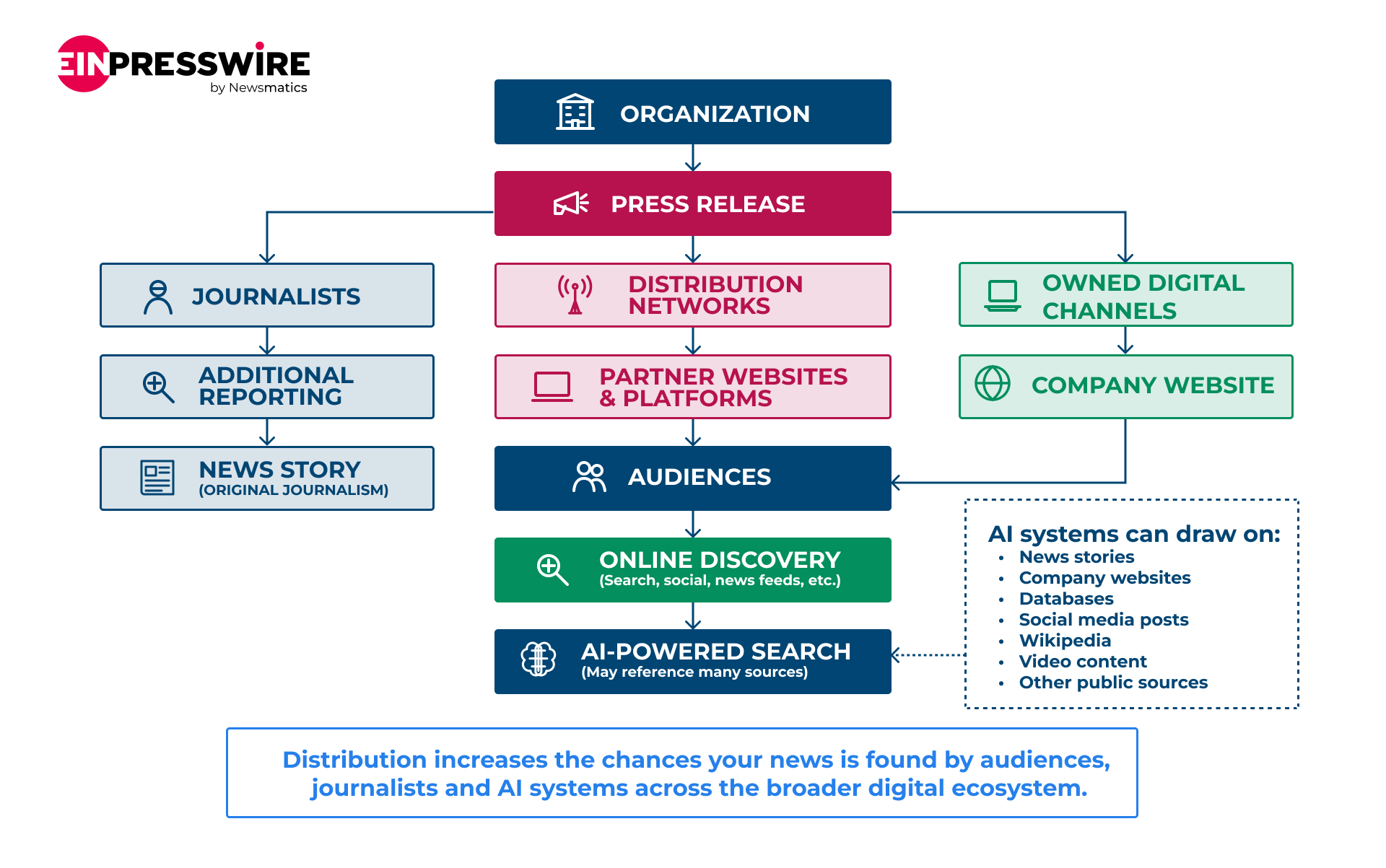
This is where press release syndication comes in. In simple terms, syndicated releases are distributed through a network of media partners, online platforms and other channels, helping organizations increase the visibility of their news.
For example, let’s say your nonprofit organization releases a new report that examines U.S. lawmakers’ stances on issues affecting Americans.
The report gives lawmakers a grade based on their support for legislative initiatives covering everything from health care and criminal justice to education and international affairs.
I’d bet my last dollar that it would be of interest to reporters covering politics. So your pitches would be aimed at journalists who cover those topics.
If sent through a news release, it would likely be considered newsworthy because it provides facts about voting records connected to lawmakers.
But what happens if they don’t respond?
Even if you continue to be ghosted by journalists, the good news is that your release about the new report on lawmakers can still reach audiences through press release distribution platforms and their media networks.
The idea is straightforward: distribution services help place your news across a network of partner websites and platforms, expanding its reach beyond your own website.
Many distribution platforms use wire networks, which function like digital distribution hubs for news announcements.
“A wire service can help an organization place its announcement into a wider information network. That may improve visibility and searchability, but it should not be confused with a reporter independently covering the story,” said Evan Kropp, executive director of Distance Education at the University of Florida College of Journalism and Communications.
Once a release is approved, it can be distributed across partner websites, media platforms and other channels while making the content searchable online for audiences and journalists.
This may include online news sites, publisher websites, industry publications, TV affiliate pages and other online outlets. It can also increase the chances of your content being discovered in AI-powered search tools.
It’s a smart way to ensure your news release isn’t just sitting on your own platforms. Let’s be honest: In the world of communications, organizations are often expected to see their news land on digital platforms other than their own.
And when journalists discover your release through search engines or other channels, it can create another opportunity for them to develop their own angle and pursue an original story.
Most reputable news organizations provide attribution when using data, research or reports from outside organizations.
That means a well-distributed report, like the hypothetical lawmakers report in this example, can give journalists a clear source to reference when developing their own stories. If they rely on the report’s findings, they’ll typically attribute the data to your nonprofit.
It can also contribute to stronger online visibility and potential SEO benefits.
That’s why a strong distribution strategy can be a valuable investment for organizations that want to increase the chances their news reaches the right audiences.
Press releases are finding a new role in the AI era
As the communications industry continues to evolve, many communicators now use press releases not only to capture the attention of journalists but also to increase their visibility in large language models (LLMs), such as Gemini, Claude or ChatGPT.
Think of LLMs as the technology behind many AI tools – a robotic force that analyzes vast amounts of online information to generate responses.
Jeremy Fields, vice president of corporate development at Newsmatics and a member of the Forbes Communications Council as well as the National Press Club, explained that AI systems rely on large amounts of information from across the internet. (Newsmatics is the parent company of EIN Presswire).
“Newsmatics understands how these large language models aggregate content from the Internet,” Fields said. “They’re looking at websites, databases, videos, reviews, forums, etc…they’re very hungry for data. They absorb all this information and then they render it to users when they ask questions to the AI chatbots.”
As more people turn to AI-powered search tools to find information about organizations, products and topics, organizations are paying closer attention to how and where their information appears online, including platforms such as ChatGPT and Google’s AI Overviews.
Data compiled by Omnibound, an AI search marketing and intelligence platform, found that AI Overviews now appear on roughly half of Google searches in the United States. The platform cited BrightEdge research and Google disclosures noting that AI Overviews have expanded to more than 200 countries and territories and more than 40 languages, reaching 2 billion monthly users worldwide.
Press releases are one type of online content that AI tools can reference when generating responses in platforms such as ChatGPT and Claude.
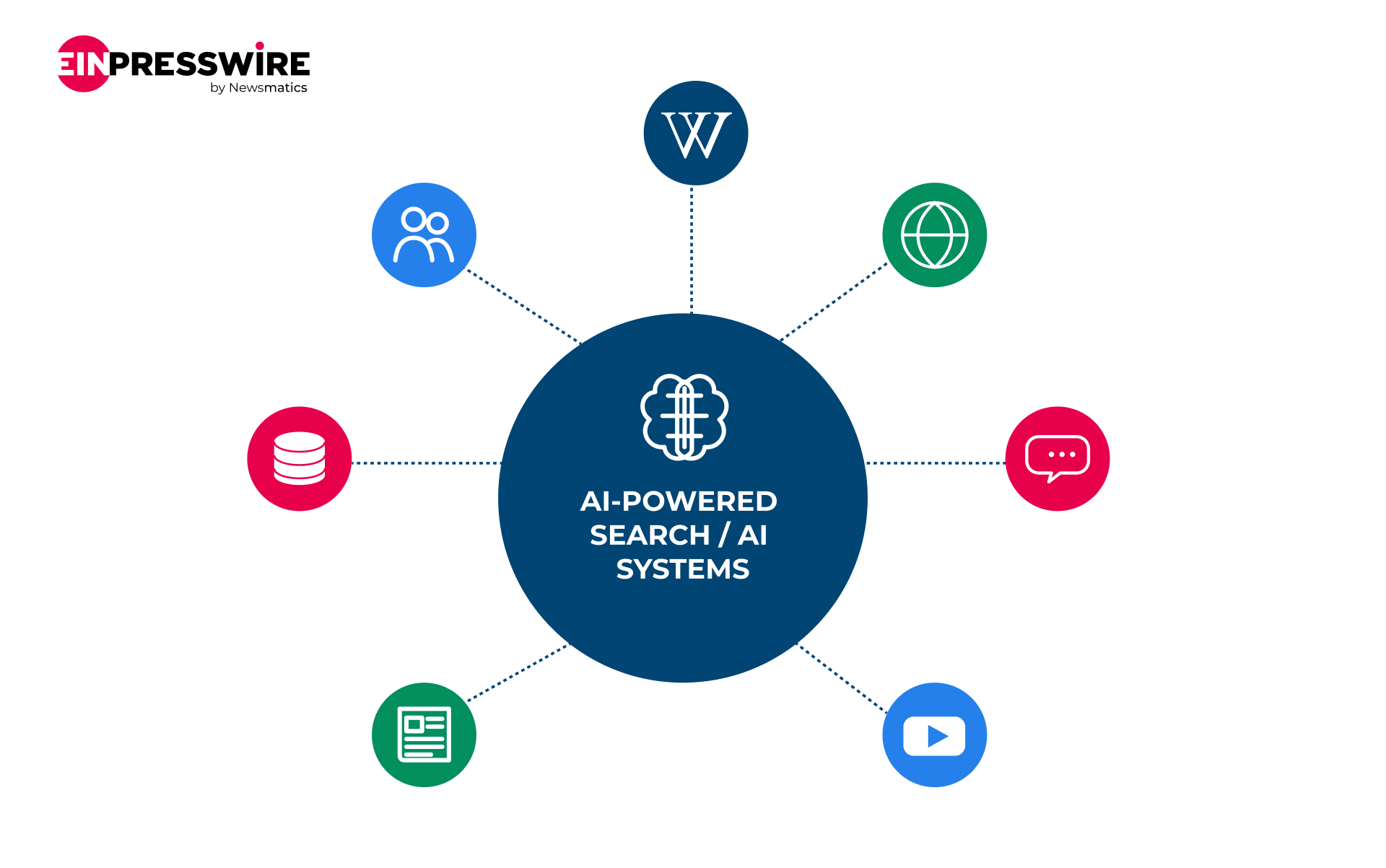
But they are only one piece of a much larger digital ecosystem. AI systems can also reference information from sources such as:
For communications professionals, this shift reinforces the importance of publishing accurate and consistent information across trusted channels.
Fields encourages organizations to maintain a consistent digital presence so AI systems have accurate and up-to-date information to reference.
“You need to push out as much content as you can - consistently,” said Fields. “Because if you’re not controlling your narrative, someone else will.”
Legal Disclaimer:
EIN Presswire provides this news content "as is" without warranty of any kind. We do not accept any responsibility or liability for the accuracy, content, images, videos, licenses, completeness, legality, or reliability of the information contained in this article. If you have any complaints or copyright issues related to this article, kindly contact the author above.
